
PyTorch核心方法之state_dict()、parameters()参数打印与应用案例
48人参与 • 2025-12-14 • ar
前言
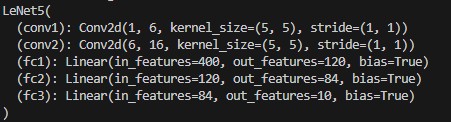
本文以 lenet-5 模型为案例,介绍了 pytorch 中打印模型参数的相关方法。首先展示了 lenet-5 模型的结构定义及打印结果;随后详细说明了三种获取模型参数的方式:
state_dict()方法返回有序字典形式的可学习参数,包含参数名称和对应张量;parameters()方法返回生成器,仅包含各层参数信息;named_parameters()方法返回生成器,包含模型名称和对应参数信息;
最后提供了利用named_parameters()进行模型结构冻结的示例,可打印确认冻结的网络名称。
模型案例
本文以lenet-5为基础模型,快速验证模型参数打印过程。
import os
os.environ['cuda_visible_devices'] = '3'
import torch
import torch.nn.functional as f
import torch.nn as nn

class lenet5(nn.module):
    def __init__(self):
        super(lenet5, self).__init__()
        # 1 input image channel, 6 output channels, 5x5 square convolution
        # kernel
        self.conv1 = nn.conv2d(1, 6, 5)
        self.conv2 = nn.conv2d(6, 16, 5)
        # an affine operation: y = wx + b
        self.fc1 = nn.linear(16 * 5 * 5, 120) # 这里论文上写的是conv,官方教程用了线性层
        self.fc2 = nn.linear(120, 84)
        self.fc3 = nn.linear(84, 10)

    def forward(self, x):
        # max pooling over a (2, 2) window
        x = f.max_pool2d(f.relu(self.conv1(x)), (2, 2))
        # if the size is a square you can only specify a single number
        x = f.max_pool2d(f.relu(self.conv2(x)), 2)
        x = x.view(-1, self.num_flat_features(x))
        x = f.relu(self.fc1(x))
        x = f.relu(self.fc2(x))
        x = self.fc3(x)
        return x

    def num_flat_features(self, x):
        size = x.size()[1:]  # all dimensions except the batch dimension
        num_features = 1
        for s in size:
            num_features *= s
        return num_features

net = lenet5()
print(net)
模型结构打印如下。
a. state_dict()方法验证
在 pytorch 中,state_dict() 是核心方法之一,用于以有序字典(ordereddict)的形式返回模型 / 优化器等实例的可学习参数(或状态),是模型保存、加载、迁移学习的基础。
state_dict() 本质是一个 python 字典(pytorch 中为 ordereddict),键为参数 / 状态的名称(字符串),值为对应的张量(torch.tensor)。
print(type(net.state_dict()))   # <class 'collections.ordereddict'>
## 遍历打印
for model_key in net.state_dict():      # 【字典格式】的遍历,获取的是模型的名称
    print(f"{model_key}: {net.state_dict()[model_key].size()}")
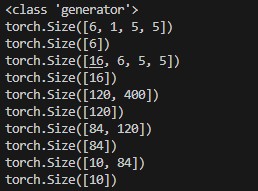
对于lenet-5模型进行打印,可以看到state_dict()的类型为 <class 'collections.ordereddict'>,各层名称及参数尺寸如下图所示。
b. parameters()
parameters()方法也可以获取到模型的参数。可以看出,parameters()获取到的是一个生成器,其中仅包含各层参数的信息。
params = net.parameters()
print(type(params))   # <class 'generator'>  生成器

for param in params:
    print(param.size())   # 只包含参数信息:具体的参数尺寸
对lenet-5进行模型参数打印。
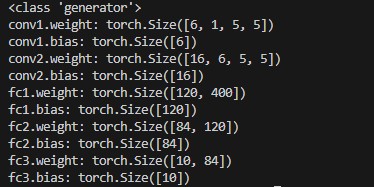
如果也需要模型名称信息,可以使用named_parameters()方法。该方法获取的也是一个生成器,其中返回的是一个元组,包括模型名称和对应的参数。
named_params = net.named_parameters()
print(type(named_params))   # <class 'generator'>  也是一个生成器

for name, param in named_params:
    print(f"{name}: {param.size()}")   # 同时获取网络名称和网络参数
对lenet-5进行模型名称及参数尺寸信息打印:
c. 模型结构冻结示例
该方法可以在对模型结构冻结时使用,如下述示例对模型结构m的参数进行冻结,同时打印确认冻结包含哪些网络结构。
# 示例
for name, param in m.named_parameters():
	param.requires_grad = false
	print(f"freezing layer {name}")
总结
到此这篇关于pytorch核心方法之state_dict()、parameters()参数打印与应用案例的文章就介绍到这了,更多相关pytorch state_dict()、parameters()参数打印内容请搜索代码网以前的文章或继续浏览下面的相关文章希望大家以后多多支持代码网!
赞 (0)
您想发表意见!!点此发布评论




发表评论